

Iraq has more than two and a half million adults with diabetes, and the number is set to more than double by 2050. Diabetic foot care is delivered by doctors and nurses in specialised diabetes centres and teaching hospitals, and the published hospital series report high amputation rates. We found no evidence that podiatry exists as a trained or licensed profession in the country.
Diabetes and foot disease burden
According to the IDF Diabetes Atlas, 2.67 million of Iraq’s 24.4 million adults aged 20 to 79 were living with diabetes in 2024, an age-standardised prevalence of 13.4%. Almost half (47.1%), about 1.26 million people, are undiagnosed, and the number with diabetes is projected to reach 5.9 million by 2050.
There is no national registry of foot ulcers or amputations, so the picture comes from single-centre studies, mostly in the south. At Al-Faiha Teaching Hospital’s diabetic foot clinic in Basrah, a 2017 cohort of 100 patients found that 60% of ulcers healed within six months, 25% needed a minor amputation and 5% a major amputation. The authors noted that no earlier Iraqi study had tracked ulcer outcomes. A study of 881 patients with ulcers at the Thi-Qar specialised diabetes centre in Nasiriyah (2021 to 2022) found that 72.3% had an HbA1c above 9% and 4.9% had already had an amputation.
Rehabilitation data point the same way. At the ICRC-supported physical rehabilitation centre in Iraq, 1,145 of 3,491 people with amputations registered between 2009 and 2018 (32.8%) had lost a limb for non-traumatic reasons, which the researchers assume are largely related to type 2 diabetes.
Who delivers foot care
- Specialised diabetes centres: provincial centres for diabetes, endocrinology and metabolism treat foot ulcers alongside general diabetes care. The Thi-Qar centre in Nasiriyah saw 881 patients with ulcers in 18 months.
- Teaching hospitals: Al-Faiha Teaching Hospital in Basrah runs a dedicated diabetic foot clinic, the source of Iraq’s first published data on ulcer outcomes.
- Baghdad: the National Diabetes Center supported the country’s first national diabetes and endocrinology conference in 2025. We could not find a published description of its foot services.
- Surgical care: many patients reach these clinics needing surgery. In a second Basrah series of 73 patients (2018 to 2019), 34.2% underwent amputation and the rest had debridement only. The authors stress that diabetic foot must be managed by a multidisciplinary team.
Regulation and training
We could find no podiatry degree, licensing category or register of podiatrists in Iraq, including in the Kurdistan Region. Foot screening and ulcer care fall to doctors and nurses, and the Basrah researchers recommend that primary care staff be trained to screen feet with simple tools and teach patients about hygiene and footwear.
The nearest allied profession is orthotics. Erbil Polytechnic University’s bachelor’s programme in prosthetics and orthotics is recognised by the International Society for Prosthetics and Orthotics for 2024 to 2029, giving Iraq a local route for training the clinicians who make orthoses and therapeutic footwear.
Professional bodies and events
The Iraqi Diabetes and Endocrine Association held the first Iraqi Diabetes and Endocrinology Conference in Baghdad in April 2025, supported by the National Diabetes Center. Its programme covered prevention, technology, the eye and special populations, but listed no diabetic foot session. We found no Iraqi diabetic foot society or dedicated national foot meeting.
Key challenges
- A diabetes population expected to more than double by 2050, with almost half undiagnosed
- No podiatry profession and no structured foot-care training for primary care
- Very poor glycaemic control among people presenting with ulcers
- High amputation rates in the published hospital series
- No national data on foot ulcers or amputations
IMEA POD Perspective
Iraq already has the backbone of a diabetic foot service: a network of specialised diabetes centres, foot clinics in teaching hospitals and a growing body of local research. What it lacks is prevention. Many patients arrive with very high blood glucose, and in the published series ulcers too often end in amputation. A short, standardised foot-care course for nurses and primary care doctors, built on the IWGDF guidelines that a Jordanian team has translated into Arabic, would be the quickest win, and the IWGDF 2027 update is a good moment to start. In the longer term, Iraq could add a foot-care practitioner role alongside the orthotists now being trained in Erbil, and ask every specialised diabetes centre to report ulcers and amputations to a single national dataset.
Sources
- IDF Diabetes Atlas: Iraq
- Marzoq et al. (2019): Outcome of diabetic foot ulcers in Basrah, a cohort study
- Marzoq et al. (2020): Predictors of surgical intervention in diabetic foot ulcers, Basrah
- Mohammed et al. (F1000Research 2024): Diabetic foot ulcers in Thi-Qar
- Barth et al. (BMJ Open 2021): People with amputations at ICRC rehabilitation centres
- ISPO: Erbil Polytechnic University prosthetics and orthotics programme
- First Iraqi Diabetes and Endocrinology Conference (2025)
- IWGDF Guidelines: Arabic translation (2025)
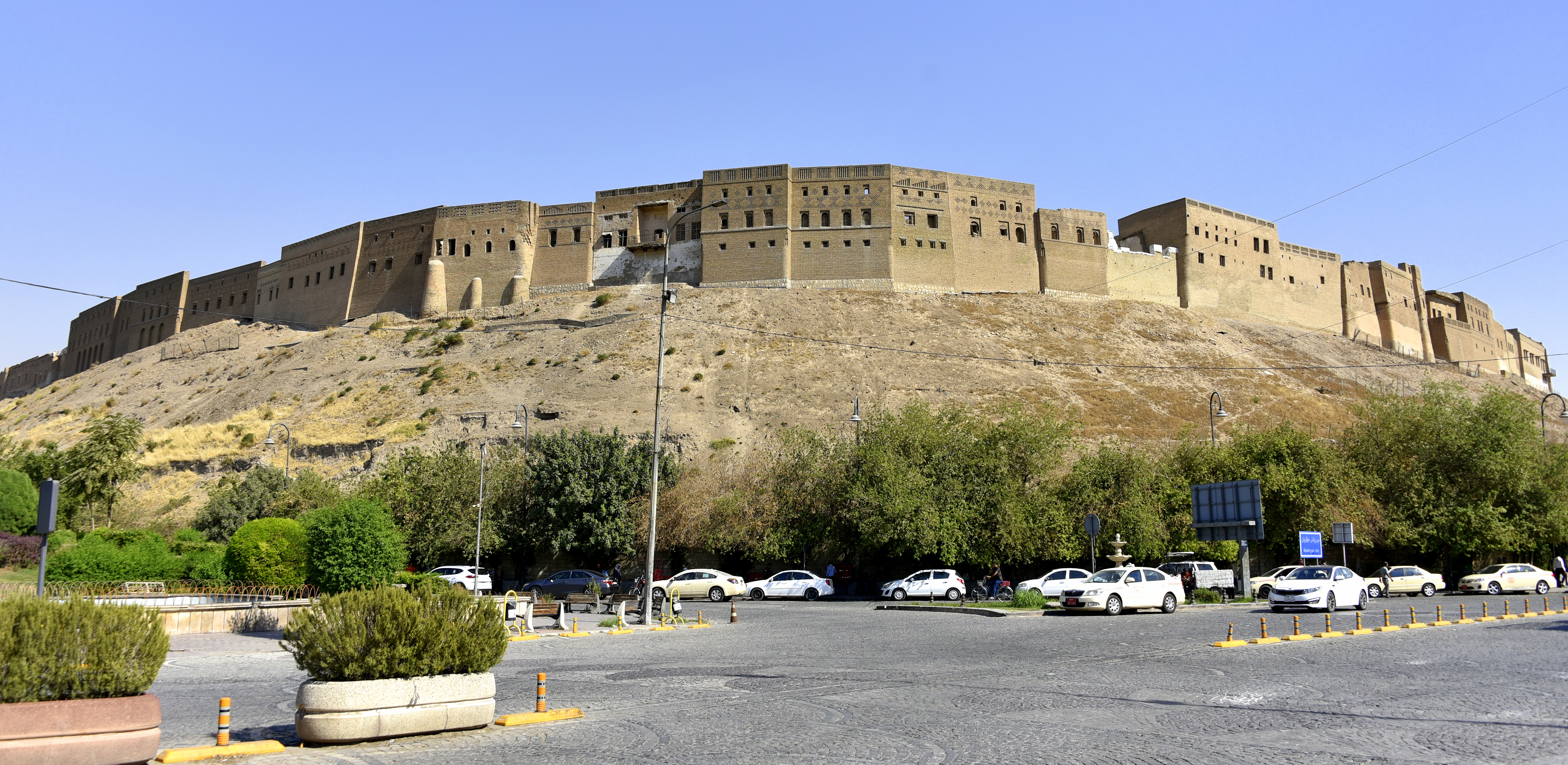
Headline photo: Citadel of Erbil by Osama Shukir Muhammed Amin FRCP(Glasg), Wikimedia Commons, CC BY-SA 4.0.