

Digital tools and community health workers can help extend diabetic foot care in resource-limited settings, but only when they are tied into primary care, referral pathways and properly supported staff, according to a narrative review published in the Journal of Multidisciplinary Healthcare.
The review of diabetic foot care in resource-limited settings
Chenxue Wang, Qinling Zhang and colleagues from institutions in Shandong and Yantai, China, reviewed evidence on diabetic foot prevention and management in high-income and low-resource health systems. The paper was published on 29 July 2026.
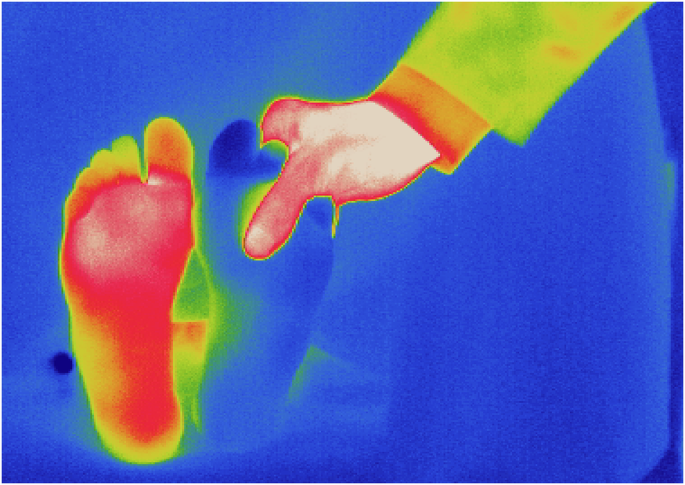
In high-income settings, they found that multidisciplinary foot teams are the intervention most consistently linked to lower major amputation rates, and that the benefit depends more on coordinated referral than on the number of disciplines involved. Digital tools play a supporting role. A randomised trial of pressure-sensing smart insoles published in The Lancet Digital Health in 2019 reported fewer ulcer recurrences, while the Smart Prevent Diabetic Feet trial of telemedical temperature monitoring recorded no ulcers in the intervention group against five in controls over 24 months, a difference that was not statistically significant because events were so few.
Telemedicine and smartphone wound photography mainly improved access to specialist advice and continuity of care, with weaker evidence for effects on amputation. Most machine-learning models for predicting ulcer outcomes were judged to be at high risk of bias.
Lessons from Africa
For sub-Saharan Africa, the review highlights late presentation, few specialists and high out-of-pocket costs, citing a Tanzanian estimate that diabetic foot care can cost the equivalent of two years of household income. It points to the Step by Step programme, which began in Dar es Salaam and uses task-sharing and low-cost training, and to Santé Diabète’s work in Mali, later extended to Burkina Faso and the Comoros, as models that combined training, access to medicines and advocacy. Partnerships between governments and NGOs can help, the authors note, but many depend on donor funding, which raises questions about how long they last.
The authors conclude that community health workers work best as supervised extensions of primary care, reinforcing self-care and referring patients, rather than making their own decisions about infection, ischaemia or severe ulcers. They also cite fast-track referral pathways in Iran that shortened delays to assessment and treatment.
Limitations
This is a narrative rather than systematic review, limited to English-language studies and without formal assessment of bias. It offers little specific data from India or South Asia, and cost-effectiveness evidence was scarce.
IMEA POD Perspective
Health ministries and hospital groups across the IMEA region are being offered apps, smart insoles, thermal scanners and AI wound tools. For diabetic foot care in resource-limited settings, this review is a useful reality check. The technology can help clinicians triage patients, communicate and follow them up, but it does not replace a foot that is examined, offloaded and treated by a trained person, and it does not fix a broken referral pathway. The strongest evidence still sits with organised multidisciplinary teams. For podiatrists and foot care leads planning services in Africa, South Asia or the Gulf, the order matters: first agree who sees the patient, who they refer to and how fast; then train community and primary care staff to screen and refer; and only then add digital tools that make that pathway faster. The review’s warning about donor-funded programmes also deserves attention. Diabetic foot care in resource-limited settings should be designed so that governments can afford to keep it running.
Sources and further reading
- Wang C, Zhang Q, Wang Y, et al. Digital Health and Community-Based Care for Diabetic Foot Prevention and Management in Resource-Limited Settings: A Narrative Review. Journal of Multidisciplinary Healthcare 2026;19. doi:10.2147/JMDH.S620320
- IWGDF Guidelines on the prevention and management of diabetes-related foot disease
- IMEA POD: Abuja foot team cuts diabetic amputation rate from 50% to 10%
[…] sets common grading and referral rules to prevent first ulcers, recurrence and amputation. We have reported on evidence that fast-track referral in Iran shortened delays to […]