

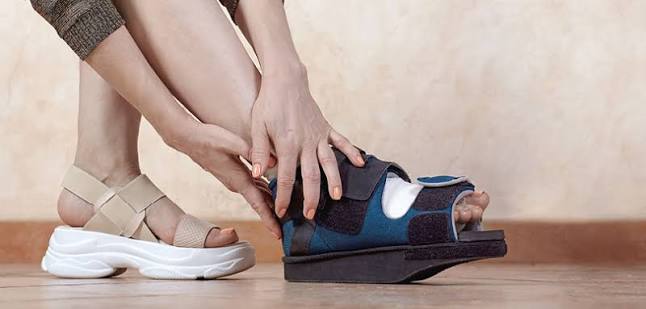
Patients facing bunion surgery are often told to expect weeks off their feet, months of swelling and a recovery that may feel worse than the bunion itself. In an opinion piece for Newsweek, Southern California foot and ankle surgeon Dr Richard Moy, DPM, argues that this reputation is outdated and that recovery should be planned as carefully as the correction.
One name, many operations
Moy’s central point is that “bunion surgery” is not one procedure. Operations for hallux valgus differ in how the bone is corrected, how much soft tissue is disturbed, how the correction is fixed and how quickly the patient is allowed to bear weight. Two patients told they are having “bunion surgery” may therefore have very different experiences. Some operations involve extensive bone work and dissection, while others aim to preserve stability, limit tissue trauma and allow early protected walking.
He accepts that restricted weight-bearing is sometimes necessary, but argues that severe pain, prolonged immobility and heavy reliance on strong painkillers should not be treated as the automatic price of a good result. Pain control, tissue handling, stable fixation, swelling management and the timing of weight-bearing all depend on how the operation is planned and performed.
What the evidence says
The article cites a 2023 systematic review and meta-analysis estimating that nearly one in five people worldwide has hallux valgus, rising to about 23% in women and in people over 60. A 2024 living systematic review of more than 100 surgical techniques found that the best approach is still debated, and a 2025 review of rehabilitation suggested early weight-bearing may improve outcomes, although its authors described the evidence as limited.
Moy argues that success should be measured by whether the correction lasts, whether the joint moves comfortably, whether function returns and what recovery actually felt like, not only by the before-and-after X-ray. Removing the bump alone, he notes, does not fix the underlying deformity, and recurrence is one of patients’ most common concerns. It is worth noting that Moy developed his own correction technique and the piece is an opinion article, not a study.
Questions patients should be able to answer
- Which procedure is planned, and why this one for my foot?
- When can I bear weight, and in what footwear or boot?
- How likely is the bunion to come back?
- How will the joint move afterwards, and when can I return to work, exercise and normal shoes?
IMEA POD Perspective
Hallux valgus is one of the most common reasons people across the IMEA region see a foot specialist, yet many patients delay surgery because of stories about long, painful recoveries, and many surgeons still default to a single familiar technique. Moy’s argument is a useful prompt for both surgeons and podiatrists. Surgeons should match the procedure to the deformity and explain the recovery plan in concrete terms before the operation. Podiatrists, who often see patients first and manage them afterwards, can help set realistic expectations, advise on footwear and offloading, and follow up on function rather than appearance alone. The region would also benefit from local outcome data: few hospitals in the Gulf, India or Africa publish recurrence rates or patient-reported recovery after bunion surgery. Collecting those numbers would let patients compare centres and help surgeons choose the right operation for each foot.
Sources and further reading
- Newsweek: It’s Time To Reassess Bunion Surgery (opinion, Richard Moy, DPM), 10 November 2026
- IMEA POD: First total ankle replacements done with Stryker’s CT-guided Prophecy Incompass
- IMEA POD: India mourns Prof Sureshwar Pandey, father of foot and ankle surgery