

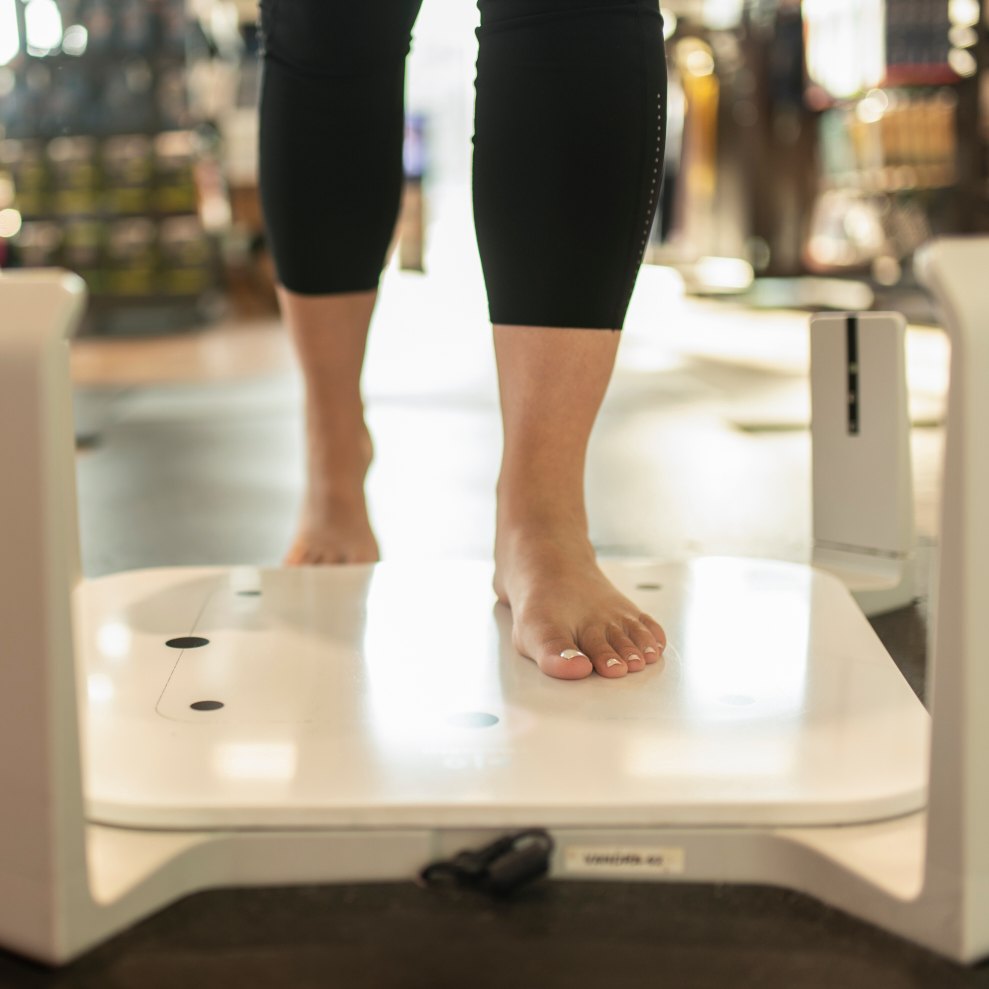
A deep-learning model that reads a weight-bearing 3D plantar foot scan classified arch type correctly in 89% of cases in a new study, and also estimated hindfoot and knee alignment, though with lower accuracy. The study, published in PLOS Digital Health on 11 November, was carried out by researchers from University College London and Shanghai Ninth People’s Hospital, Shanghai Jiao Tong University School of Medicine.
Table of Contents
How the 3D plantar foot scan model works
The team used static, full weight-bearing 3D foot scans from 167 children and adults aged 6 to 60 at a single clinical centre. The model combines two streams of information: a colour image of the plantar surface, and 16 measurements of foot shape, such as medial arch height, forefoot width, hallux valgus angle and heel width. An attention module weighs the two before the model classifies arch type, hindfoot alignment relative to the tibia and frontal-plane knee alignment. Clinical experts labelled each participant from physical examination.
Results
- Arch type: 89% accuracy, with an area under the curve of 0.98.
- Hindfoot alignment: 81% accuracy, although more than 80% of feet in the dataset were in valgus, which makes high accuracy easier to achieve.
- Knee alignment: 76% accuracy, the most difficult task.
The combined model was not best at everything. An image-only model scored higher for arch type, and a version without the attention module did slightly better for knee alignment. Heatmaps showed the model concentrating on the medial longitudinal arch for arch type, and on the central plantar area and the region under the first metatarsophalangeal joint for knee alignment.
Limitations
The authors present the tool as a screening-level, preliminary assessment rather than a diagnostic test. The dataset was small and came from one centre. Labels came from clinical examination rather than standing full-leg radiographs, the reference standard for coronal alignment. Static scans do not capture what happens during gait, and the model has only been validated internally. The authors call for larger, multicentre studies with external testing, and for future versions to add plantar pressure or gait data. They declare no competing interests.
IMEA POD Perspective
3D foot scanners are increasingly common in orthotic labs, footwear retailers and sports clinics across the Gulf and India, usually to capture foot shape for custom insoles. This study points to a second use: turning the same scan into a quick screen for alignment problems that may warrant a full biomechanical assessment, including in children. That could be valuable in school or community screening where podiatrists are scarce. But 76% accuracy for knee alignment, from a single-centre dataset with examination-based labels, is not yet good enough to change clinical decisions.
For now, a scan should prompt an assessment, not replace one. Pedorthists and podiatrists evaluating scanning software that claims to assess alignment should ask what it was validated against, in which population, and whether it has been tested outside the centre where it was developed. The same questions apply to the AI screening tools now reaching diabetic foot care, such as thermal foot scanning.
Sources and further reading
- Ni S, Chen Y, Wang C, et al. Development and internal validation of a multimodal deep learning model for screening-level lower-limb alignment using plantar 3D foot scans. PLOS Digital Health 2026;5(11):e0001802
- IMEA POD: 3D printed orthotics, a podiatrist’s seven lessons from 5,000 TPU pairs
- IMEA POD: TFScan AI thermal foot screening now available in UAE through ARJ Group