

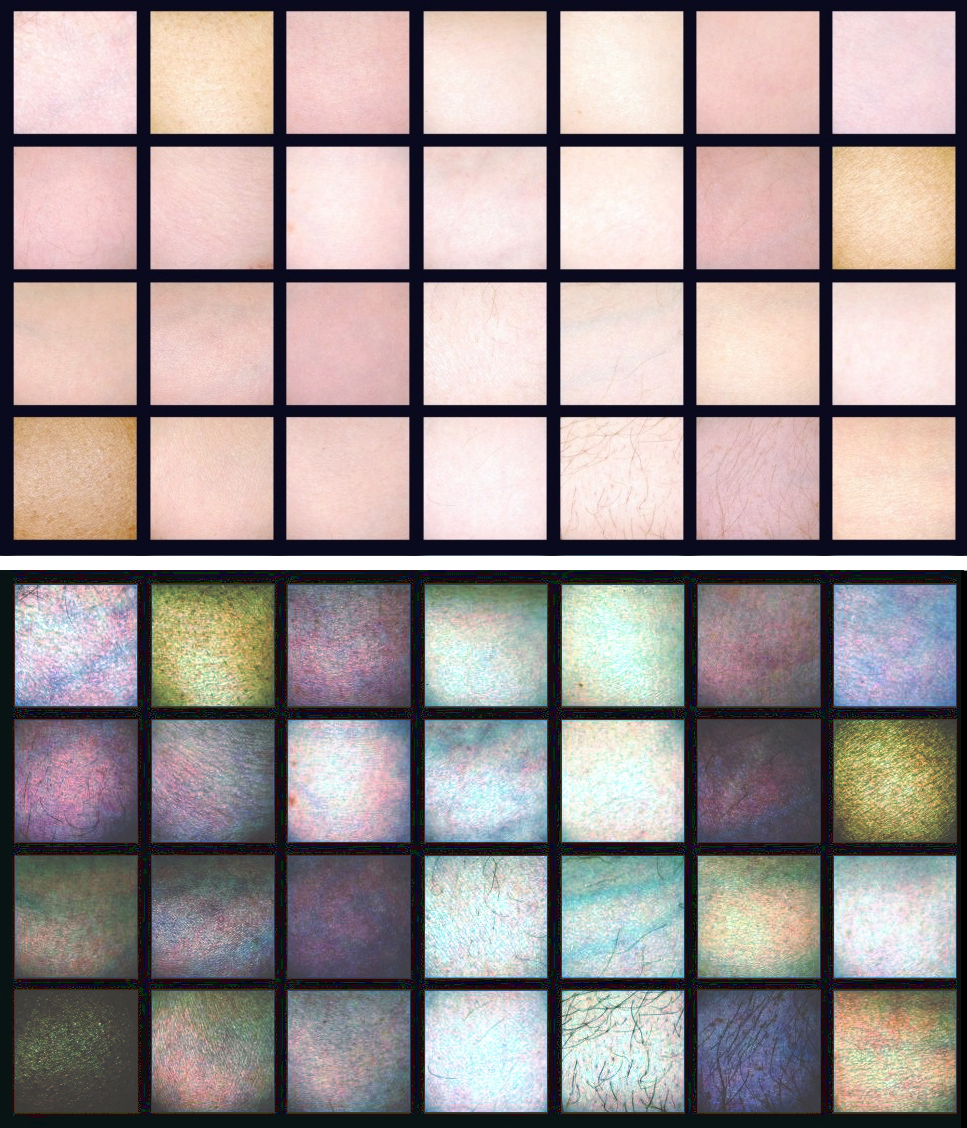
A system that estimates blood oxygenation in the foot from ordinary smartphone photographs could one day offer low-cost perfusion screening for people with diabetes, according to a study in BMC Artificial Intelligence, highlighted this month by Bioengineer. The tool, called MobiPerf, needs no special camera or calibration target.
How MobiPerf works
Hyperspectral imaging captures light across many narrow wavelengths, allowing oxygenated and deoxygenated blood in the skin to be distinguished, but the cameras are expensive and rarely available outside specialist centres. Gherardi, Bo, Demirbas, Zhan and Xu used a transformer-based neural network to reconstruct hyperspectral data from standard RGB phone images, then applied a calibration-free algorithm to estimate skin composition and oxygenation.
What the study found
In a test with 10 participants, in whom blood flow was restricted with a cuff, MobiPerf’s oxygenation estimates tracked reference hyperspectral recordings closely, with a mean Pearson correlation of 0.865. Accuracy fell under some non-neutral lighting, such as an LED flash, where the correlation dropped to about 0.63.
The authors also tested whether the method could pick up the pulse. On a public dataset of 56 people, heart rate error was about 5.1 beats per minute at rest, rising to 11 to 12 when participants were speaking or doing mental arithmetic, because movement interfered.
Applied to about 6,000 diabetic foot ulcer photographs from the DFUC2021 challenge dataset, average oxygenation differed significantly between ulcer categories. Ischaemic ulcers showed a strong skew towards high hypoxia values, while ulcers with both ischaemia and infection showed two peaks. The method was much less able to identify infection alone.
Limitations
This is early, small-scale work. The authors point to lens chromatic aberration, automatic colour correction in phone cameras, and the need to test the method across more skin tones. They plan to look for bacterial absorption signatures and to make the model fast enough for real-time use on a phone. MobiPerf has not been tested as a clinical diagnostic.
IMEA POD Perspective
Perfusion assessment is one of the biggest gaps in diabetic foot care across the IMEA region. Many clinics have no handheld Doppler, and fewer still can measure toe pressures or transcutaneous oxygen. A phone-based tool that flags ischaemia could help nurses and community health workers decide who needs urgent vascular referral. But two cautions matter. First, skin tone: optical methods that are not validated on darker skin may underestimate risk in exactly the African and South Asian populations that most need them, so validation in IMEA cohorts must come before deployment. Second, MobiPerf should be judged as a triage aid, not a replacement for the bedside tests that international guidance recommends, including pulse palpation, Doppler waveform assessment and ankle- or toe-brachial indices. Indian start-ups such as Ayati Devices are already working on low-cost diabetic foot diagnostics. Regional researchers are well placed to lead the validation studies this field now needs.
Sources and further reading
- Gherardi, Bo, Demirbas, Zhan, Xu. Hyperspectral reconstruction for mobile diabetic foot blood perfusion monitoring. BMC Artificial Intelligence 1, 10
- Bioengineer: Smartphone optical reconstruction monitors diabetic foot perfusion without calibration targets
- IMEA POD: Bengaluru’s Ayati Devices raises Rs 15 crore to scale diabetic foot diagnostics
- IMEA POD: IWGDF 2027 guidelines, what foot teams should expect