

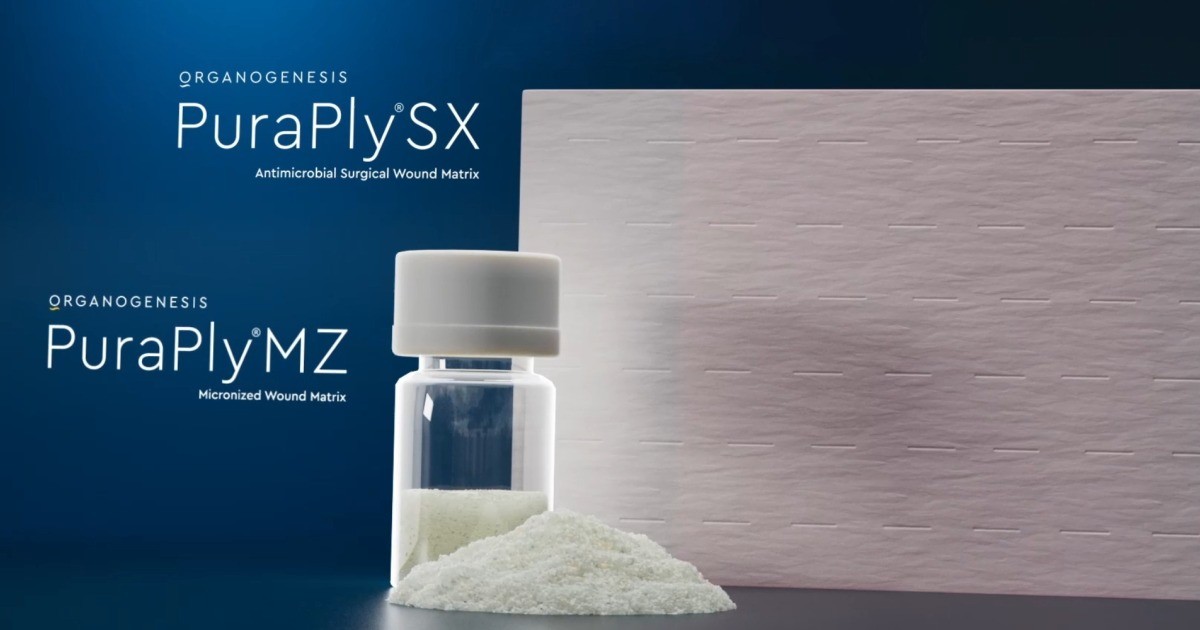
Results of a randomised controlled trial of PuraPly AM, an antimicrobial wound matrix made by US company Organogenesis, have been published in the Journal of Wound Care, the company announced on 12 October.
The PuraPly AM trial
PREPARE1 was a prospective, multicentre, randomised controlled trial comparing PuraPly AM plus standard of care with standard of care alone in hard-to-heal diabetic foot ulcers. According to Organogenesis, the trial met its primary endpoint, with a statistically significant improvement in wound closure at 12 weeks in the PuraPly AM group. The company first announced topline results in April 2026.
PuraPly AM is a cross-linked collagen extracellular matrix scaffold that contains the antimicrobial agent polyhexamethylene biguanide (PHMB). It is designed to manage bioburden in the wound while providing a scaffold for tissue repair.
The company’s announcements do not give patient numbers, closure rates in each arm or secondary outcomes; those are reported in the journal paper. “Peer-reviewed data continues to differentiate us in a recalibrated market,” said Patrick Bilbo, Organogenesis’s chief operating officer.
Context
Bacterial bioburden and biofilm are widely recognised barriers to healing in chronic diabetic foot ulcers, which is why antimicrobial dressings and products are so commonly used. Evidence that they actually speed healing, rather than simply controlling bioburden, has been limited, and well-designed randomised trials in this area remain relatively scarce.
Skin substitutes and other cellular and tissue-based products have come under growing scrutiny over cost and evidence, particularly in the US, where most of them are marketed. Randomised trials such as PREPARE1 are part of manufacturers’ efforts to show benefit over good standard care. The IWGDF is due to update its wound healing guidance in 2027; read our explainer on what to expect.
IMEA POD Perspective
Advanced wound matrices are expensive and their availability across the IMEA region is patchy, so good evidence matters. This trial adds randomised data, but it is company-sponsored and the headline figures have not been released beyond the journal paper. Clinicians should read the full publication, including the size of the benefit and how “hard-to-heal” was defined, before drawing conclusions. In most of the region, the biggest gains will still come from the basics: offloading, sharp debridement, infection control and timely revascularisation. Products like this are best considered for ulcers that fail to respond to well-delivered standard care, not as a substitute for it.
Sources and further reading
- Investing.com: Organogenesis announces publication of diabetic foot ulcer trial
- Organogenesis press release: publication of peer-reviewed PREPARE trial results
- IMEA POD: IWGDF 2027 guidelines, what foot teams should expect