

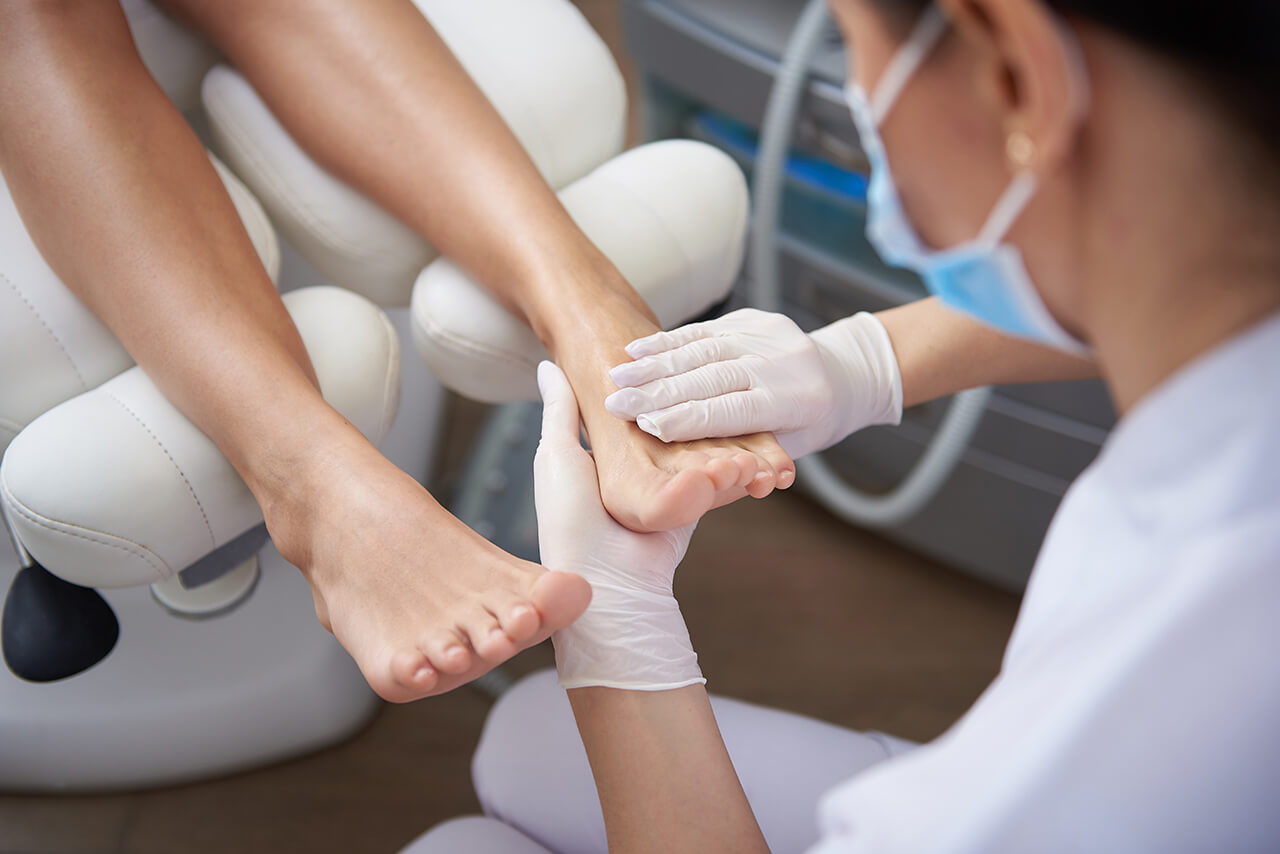
In Germany, a person with diabetes and numb feet can get a doctor’s prescription for foot care, just as they would for physiotherapy. The care is delivered by a podologist (Podologin or Podologe), a state-registered health professional whose training is set in federal law, and it is paid for by statutory health insurance. The model, often called medizinische Fußpflege or medical foot care, has been in place for more than two decades, and it offers a template that much of the IMEA region urgently needs.
How the German system works
The Podologengesetz (Podiatry Act), in force since 2 January 2002, protects the titles Podologin/Podologe and also medizinische Fußpflegerin/medizinischer Fußpfleger (medical foot carer). Only people with state permission may use them. Anyone else can still offer cosmetic foot care, or kosmetische Fußpflege, but not under a medical title.
Training lasts two years full time at a state-recognised school, with 2,000 hours of theoretical and practical teaching plus 1,000 hours of practical placements, and ends in a state examination. Graduates are trained to carry out general and specialised foot care to strict hygiene standards, to recognise changes that need a doctor’s assessment, and to deliver medically prescribed podological treatment.
Prescribed and paid for
Podological therapy is a Heilmittel, a prescribable therapeutic service under statutory health insurance. It is covered for people with diabetic foot syndrome who have a sensory disturbance and, since 1 July 2020, also for people with comparable foot damage caused by other neuropathies or spinal cord conditions. Treatment such as callus removal and professional nail care is limited to feet without a skin defect (Wagner grade 0), plus ingrown toenails; open ulcers stay with doctors and specialist foot centres.
The scale is significant. Germany has around 11 million people with diabetes, and 716,000 to 850,000 are treated for diabetic foot syndrome each year, according to diabetesDE. A workforce analysis published in 2020 estimated about 5,600 podiatry practices and, based on Federal Statistical Office data, around 20,000 podologists, although the authors called the figures uncertain and found a relative shortage of staff.
Not a finished model
Germany’s own profession says the law is overdue for reform. The Bundesverband für Podologie has called for three-year training, an academic route alongside school-based training, and recognition of podiatry as independent medical practice, with certain tasks reserved for podologists. A draft federal law published on 26 October 2026 reforms physiotherapy training but does not yet cover podiatry. Trainees have also often paid school fees, though some states, such as Saxony-Anhalt, have moved to abolish them.
Where medical care meets wellness
Alongside the podologists is a further workforce of foot care practitioners, or Fußpfleger, estimated at around 20,000 people. Many trained through private courses and work in their own practices, beauty salons, care homes or patients’ homes. Their work runs from callus and nail care to foot baths, massage and nail design. Those without the podologist’s licence cannot use a medical title or treat on prescription, but they see clients regularly and are often the first to spot a problem and refer it on.
That mix of medical, cosmetic and wellness foot care sustains a German supply industry with global reach. Eduard Gerlach of Lübbecke, maker of GEHWOL, is a seventh-generation family company. It sells foot care cosmetics, medical devices, instruments and practice equipment in more than 60 countries. Hellmut Ruck of Neuenbürg, founded in 1927 and now run by the third generation, supplies more than 6,500 products to the foot care and cosmetics trade. Gustav Baehr of Waiblingen, founded in 1949, serves foot care and beauty professionals with brands such as PEDIBAEHR and BAEHR BEAUTY CONCEPT. SÜDA of Karlsruhe, part of Ionto Health & Beauty, makes foot care devices, treatment chairs, instruments and practice hygiene products for podiatry and foot care practices, alongside its SÜDA CARE skin care range.
The combination matters. A client who comes for a relaxing pedicure tends to come back every few weeks. That makes foot care a viable small business, and regular contact is exactly what a person with diabetes needs for early detection.
Why IMEA needs this model
The IMEA region carries a far heavier burden. The International Diabetes Federation estimates that 85 million adults live with diabetes in the Middle East and North Africa, and India alone has 89.8 million, projected to reach 156.7 million by 2050. Yet much of the region has no podiatry training at all. Nigeria has no podiatry school, Namibia has only just set rules for podiatrists, and Gulf employers compete to recruit podiatrists. Routine foot care for high-risk patients usually falls to busy doctors and nurses. Otherwise it falls to salons and spas whose pedicures are purely cosmetic, where staff are not trained to recognise a numb or poorly perfused foot.
IMEA POD Perspective
The German model is not glamorous, and that is its strength. It does not depend on surgeons or high-tech wound centres; it puts a trained, regulated and reimbursed foot care practitioner between the high-risk patient and the ulcer. Four elements could be transferred almost anywhere. The first is a protected title, so patients can tell medical foot care from a pedicure. The second is a defined two- to three-year training standard that vocational colleges can deliver, not only universities. The third is a funded referral pathway, so that a doctor’s prescription unlocks regular preventive care. The fourth is a trained tier of foot carers who can run viable businesses by combining wellness services with basic medical foot care. The region’s large beauty and spa sector already has the premises and the clients; what it lacks is the training and the referral links. Gulf states with mandatory health insurance could adopt this quickly. Countries such as India, Pakistan, Egypt and Nigeria could use the vocational route to build a workforce at scale alongside degree-level podiatrists, and that workforce would in turn create a market for the region’s suppliers and distributors. With diabetes rising fastest in our region, a cadre of medical foot carers may be the most affordable amputation-prevention programme available.
Sources and further reading
- Gesetz über den Beruf der Podologin und des Podologen (Podologengesetz, PodG)
- vzbv: Kassen zahlen künftig häufiger Fußpflege beim Podologen
- KV Baden-Württemberg: Erweiterte Indikationen für Podologie ab 1. Juli 2020
- Der Fuß: Ein rares Gut – der Podologe
- Bundesverband für Podologie: Novellierung des Berufsgesetzes
- International Diabetes Federation: Middle East and North Africa
- Eduard Gerlach / GEHWOL company press release
- Gustav Baehr GmbH: About us
- SÜDA: Foot care devices and accessories for professionals