

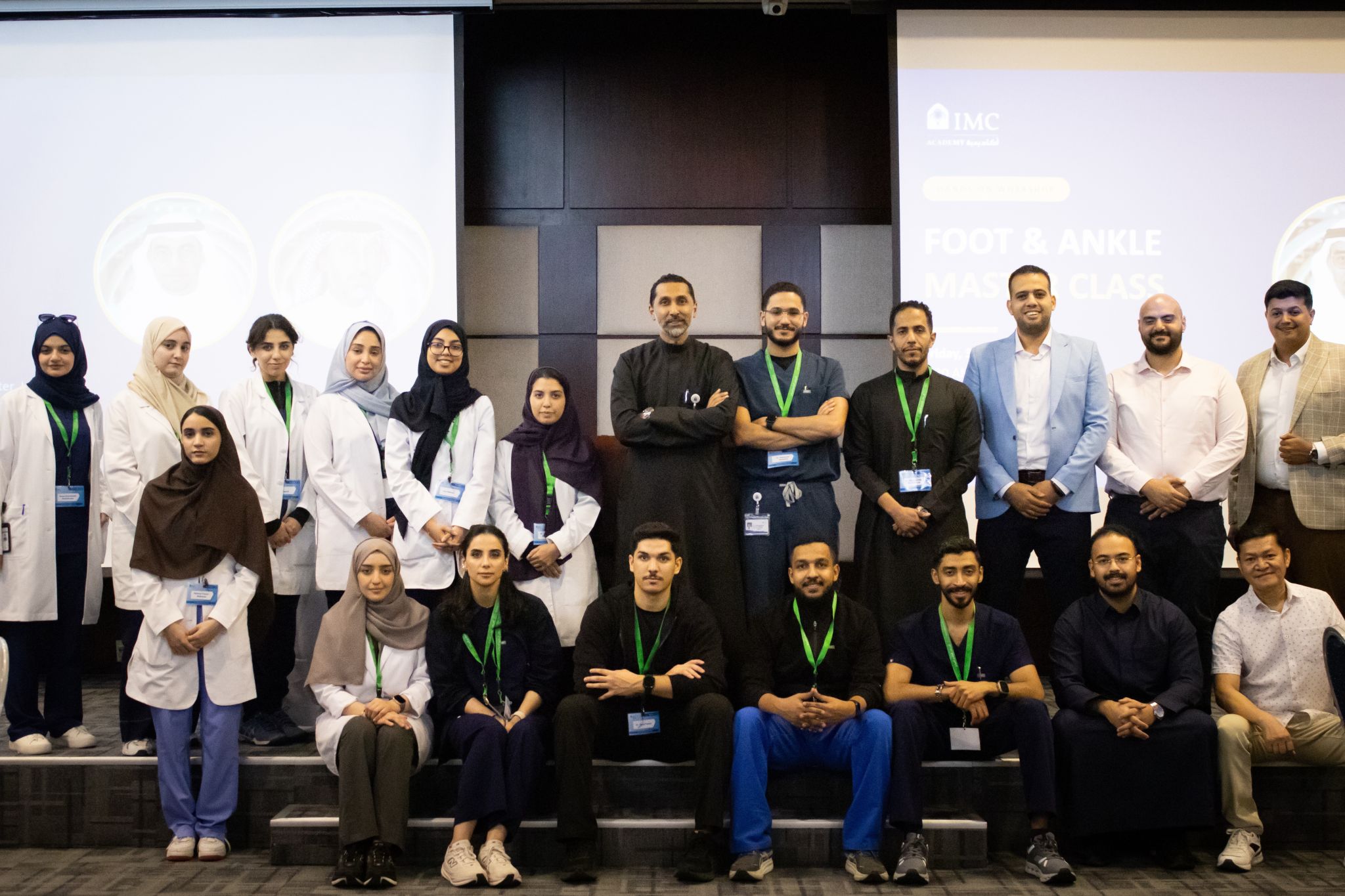
The Foot & Ankle Master Class, a hands-on scientific workshop run by IMC Academy, brought together clinicians from across foot and ankle care at the International Medical Center (IMC) in Jeddah. The programme combined lectures with practical skills stations. Casting techniques were one of the main practical elements.
One of the trainers, Dr Mohammed Alnadhairi, a foot and ankle surgery resident, described the workshop on LinkedIn. He said he led the casting part of the hands-on training. He described the day as an interactive format built around sharing experience and developing clinical skills, with colleagues from different disciplines and levels of experience.
He thanked the organisers, trainers and participants, especially Dr Hani Badahdah and Dr Mohammad Maddah. He also said that teaching others matters as much as learning yourself.
Podiatric surgery leadership at IMC
Dr Hani Badahdah is Consultant, Podiatric Surgery (Foot and Ankle) in IMC’s Musculoskeletal Center of Excellence. He holds both MD and DPM qualifications. He studied medicine at King Abdulaziz University in Jeddah, then earned his DPM and MS at Barry University in the United States, followed by a podiatric foot and ankle surgical residency (2013–2016).
According to Barry University, he is a Diplomate of the American Board of Multiple Specialties in Podiatry, board certified in foot and ankle surgery, and a certified wound specialist physician. He also completed a one-year reconstructive foot and ankle surgery fellowship at UT Health San Antonio under Professor Thomas Zgonis.
IMC’s Musculoskeletal Center lists foot and ankle surgery and diabetic foot surgery among its services. Its diabetic foot work focuses on limb preservation and wound care.
Why casting still matters
Casting is a core skill across the foot and ankle team. It is used for immobilising fractures and post-operative care. It is also used for deformity management and, in the form of total contact casting, for offloading neuropathic plantar ulcers. Total contact casting has long been regarded as a gold-standard offloading method for suitable diabetic foot ulcers. However, it is used far less than it should be, because it takes skill and time to apply safely. Poorly applied casts can cause pressure injuries, so supervised hands-on practice is especially valuable for residents and allied clinicians.
The group photo from the Jeddah workshop shows a mix of surgeons, residents and clinicians in white coats and scrubs. That reflects the multidisciplinary make-up of foot and ankle services in Saudi Arabia, where podiatric surgeons, orthopaedic surgeons, wound care teams and allied health professionals increasingly work side by side.
A growing training calendar in the Gulf
Hospital-based workshops like this sit alongside a busier regional calendar of foot and ankle education. This year Saudi Arabia hosted a Foot & Ankle Cadaveric Course at King Abdullah bin Abdulaziz University Hospital in September. Dubai hosted the AO Trauma Masters Course – Foot & Ankle later the same month.
For podiatrists, pedorthists and foot and ankle surgeons in the region, short practical courses run inside working hospitals give them a way to build hands-on skills like casting. They can do this close to home and alongside the colleagues they will refer to and work with.
Suggested hyperlinks
- Dr Mohammed Alnadhairi on LinkedIn
- Dr Hani Badahdah on LinkedIn
- IMC: Dr Hani M. Badahdah profile
- IMC Musculoskeletal Center of Excellence
- Barry University: Hani Badahdah, MD, DPM
- Foot & Ankle Cadaveric Course, Saudi Arabia 2026
- EFORT foot and ankle events calendar